

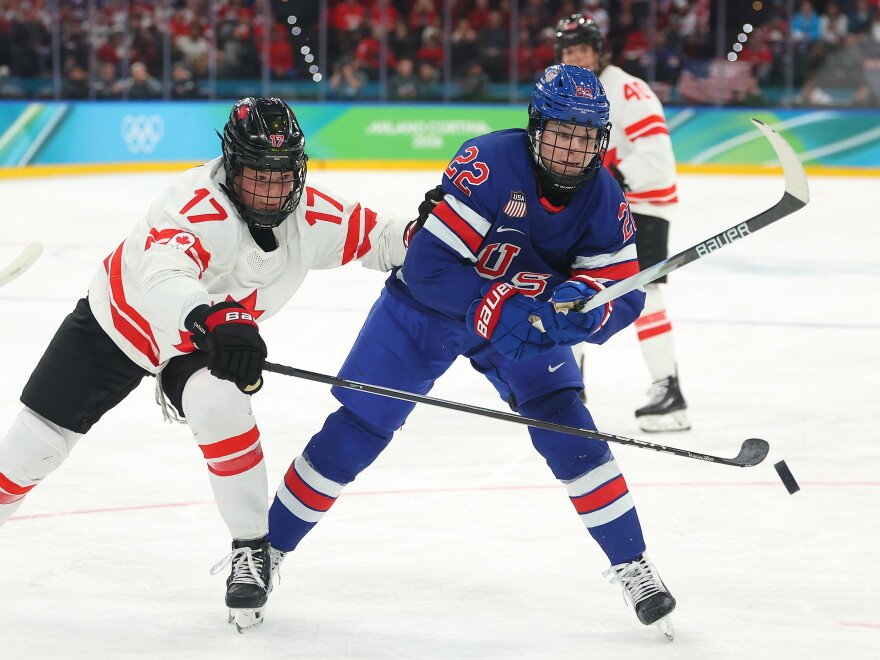
The 2026 Winter Olympics ice hockey tournaments brought together some of the world’s strongest national teams for an exciting showcase of speed, skill, teamwork and international rivalry. Held as part of the Milano Cortina 2026 Winter Olympic Games in Italy, the competitions featured both men’s and women’s ice hockey, giving fans opportunities to watch elite athletes compete for Olympic medals. The return of National Hockey League (NHL) players to the men’s Olympic tournament for the first time since 2014 added further excitement, as several of the world’s best professional players represented their countries on the international stage.
Ice hockey is one of the most popular events at the Winter Olympics because it combines physical strength, quick decision-making, tactical discipline and individual brilliance. Every match can change dramatically within seconds, making the sport particularly entertaining for viewers. The 2026 competition also highlighted the importance of goaltending, special teams, defensive organization and effective teamwork. From preliminary-round games to the medal matches, the tournament provided a compelling opportunity to explore the best of international hockey.
Overview of the 2026 Winter Olympics Ice Hockey Tournament
The Milano Cortina Games hosted men’s and women’s ice hockey competitions across two venues in Milan. The men’s tournament included 12 national teams, while the women’s tournament featured 10 teams. Together, the competitions consisted of 58 scheduled games, with each tournament following its own format to determine the medal winners.
The women’s competition began on February 5, 2026, one day before the Olympic opening ceremony, and concluded on February 19. The men’s tournament ran from February 11 to February 22, ending on the final day of the Games. Both competitions included preliminary rounds followed by knockout stages, where teams had to deliver their best performances under increasing pressure.
The tournament was particularly significant for men’s hockey because NHL players returned to Olympic competition after missing the 2018 and 2022 Games. Their participation brought together established international stars and leading professional players, strengthening the competition and increasing global interest.
Key Facts About Olympic Ice Hockey in 2026
| Tournament detail | Information |
|---|---|
| Olympic event | Milano Cortina 2026 |
| Host country | Italy |
| Main competition city | Milan |
| Men’s tournament | February 11–22, 2026 |
| Women’s tournament | February 5–19, 2026 |
| Men’s participating teams | 12 |
| Women’s participating teams | 10 |
| Total scheduled games | 58 |
| Main venues | Milano Santa Giulia and Milano Rho |
| Men’s gold medal winner | United States |
| Men’s silver medal winner | Canada |
| Men’s bronze medal winner | Finland |
Men’s Ice Hockey: Teams and Tournament Format
The men’s competition brought together 12 national teams divided into three groups of four. Canada, the United States, Finland, Sweden, Germany, Switzerland, Czechia, Italy, Slovakia, Latvia, Denmark and France competed in the tournament. The teams qualified through international rankings, host-nation status and Olympic qualification events.
During the preliminary round, each team played the other teams in its group. These matches helped establish the overall rankings used to determine the knockout-stage matchups. The best-ranked teams earned direct entry into the quarterfinals, while the remaining teams competed in qualification playoffs for the other quarterfinal places.
This structure made consistency important throughout the competition. A team could not rely entirely on one outstanding performance; it also needed strong defensive play, reliable goaltending and enough scoring opportunities to finish its group matches in a favorable position. The knockout stage raised the stakes further because a single defeat could end a team’s hopes of winning gold.
The tournament concluded with the medal games, where the remaining four teams competed for Olympic honors. The United States ultimately claimed the men’s gold medal after defeating Canada in a dramatic overtime final.

Women’s Ice Hockey: Competition and Medal Opportunities
Women’s ice hockey was another major attraction at Milano Cortina 2026. Ten national teams competed in a tournament that showcased technical skill, speed, disciplined defending and strong team chemistry. Women’s Olympic hockey has developed considerably over the years, attracting growing international attention and encouraging investment in player development.
The women’s tournament began on February 5 and featured preliminary-round games before progressing to the knockout stage. Teams needed to manage their energy carefully, adapt their tactics to different opponents and maintain concentration across consecutive games. The margin between victory and defeat can be extremely small in elite international hockey, making defensive positioning and goaltender performance particularly important.
Canada and the United States remained among the central contenders because of their long-standing rivalry and history of success. Other national teams also had opportunities to challenge established powers and demonstrate the progress of women’s hockey in their countries. The competition helped underline the growing depth of international talent and the importance of Olympic exposure for the sport.
The women’s medal matches took place on February 19, bringing the tournament to a close before the final stages of the men’s competition.
Important Ice Hockey Venues in Milan
The Olympic ice hockey matches were staged at two venues in Milan: the Milano Santa Giulia Ice Hockey Arena and the Milano Rho Ice Hockey Arena. Both facilities supported the competition, allowing preliminary-round matches and major knockout games to take place within the host city.
The Milano Santa Giulia Ice Hockey Arena served as the main venue and hosted important games, including key knockout and medal matches. Its modern design and large spectator capacity made it a central location for the Olympic hockey program. The arena was developed to accommodate elite competition while also serving as a venue for future sporting and entertainment events.
The Milano Rho venue provided additional ice hockey capacity, helping accommodate the tournament’s busy schedule. Using two venues allowed organizers to manage multiple games efficiently while providing suitable facilities for athletes, officials and spectators.
For fans, the venues represented more than competition spaces. They became meeting points for supporters from different countries, creating an atmosphere filled with national colors, team chants and excitement. The concentration of games in Milan also made the city an important destination for hockey fans attending the Winter Olympics.
2026 Winter Olympics Ice Hockey Schedule and Major Results
The competition schedule was designed to move teams from group-stage matches into increasingly challenging knockout games. The women’s tournament began on February 5, while the men’s tournament started on February 11. Qualification playoffs and quarterfinals followed the preliminary rounds, leading to the semifinals and medal matches.
The men’s gold medal game on February 22 became one of the most memorable moments of the Games. The United States defeated Canada 2–1 in overtime, with Jack Hughes scoring the winning goal. Finland secured bronze after beating Slovakia 6–1 in the third-place match. In the women’s competition, the United States also won gold by defeating Canada 2–1 in overtime. Switzerland earned the women’s bronze medal after defeating Sweden.
These results made the tournament particularly memorable because the United States won both the men’s and women’s Olympic ice hockey titles. The finals also demonstrated how closely matched the leading teams were, with overtime required to decide both gold medal games.
Major Men’s Tournament Results
| Stage | Match | Result |
|---|---|---|
| Quarterfinal | Canada vs Czechia | Canada won 4–3 in overtime |
| Quarterfinal | United States vs Sweden | United States won 2–1 in overtime |
| Semifinal | Canada vs Finland | Canada won 3–2 |
| Semifinal | United States vs Slovakia | United States won 6–2 |
| Bronze medal | Finland vs Slovakia | Finland won 6–1 |
| Gold medal | United States vs Canada | United States won 2–1 in overtime |
NHL Stars and Players Who Attracted Attention
The return of NHL players was one of the biggest talking points surrounding the men’s Olympic competition. Fans had the opportunity to watch leading professional players represent their national teams, bringing together talent from the world’s most prominent professional hockey league.
Canadian stars such as Connor McDavid and Sidney Crosby attracted considerable attention, while the United States featured players including Auston Matthews, Jack Hughes and Matthew Tkachuk. Sweden, Finland, Germany and other participating nations also fielded experienced players with the ability to influence crucial matches.
Individual talent, however, was only one part of the competition. Teams needed to combine offensive creativity with disciplined defense and dependable goaltending. Players had limited time to create scoring opportunities, so quick passing, accurate shooting and intelligent positioning were essential.
Goaltenders were particularly influential during close matches. A series of important saves could maintain a team’s advantage or prevent an opponent from taking control. The tournament’s overtime finishes showed that even the smallest defensive mistake could determine the outcome of an Olympic medal contest.
Rules and Scoring in Olympic Ice Hockey
Olympic ice hockey follows international rules designed to maintain competitive fairness and player safety. Each team normally has six players on the ice at a time: five skaters and one goaltender. Teams can change players while play continues, allowing coaches to manage fatigue and introduce specialized line combinations.
A standard game consists of three periods of 20 minutes each. The objective is to score more goals than the opposing team by shooting the puck into its net. Players use sticks to control, pass and shoot the puck, while defenders attempt to disrupt attacks and protect their goaltender.
Penalties are awarded for rule violations such as tripping, hooking, holding and certain forms of dangerous contact. A penalized player may have to leave the ice temporarily, giving the opposing team a power-play opportunity. Penalty killing requires excellent communication, positioning and anticipation.
When knockout matches remain tied after regulation, overtime and, where required, a shootout are used according to the competition’s specific rules. Overtime is especially exciting because a single goal can decide the winner. The 2026 finals provided clear examples of how quickly a match can be settled once extra time begins.
Why the 2026 Tournament Was Significant
The Milano Cortina competition was important for several reasons. First, the return of NHL players gave men’s hockey a best-on-best international contest, allowing supporters to compare elite professional talent across national teams. The event also renewed established rivalries and created opportunities for players to establish their reputations on the Olympic stage.
Second, the simultaneous success of the United States in both tournaments created a remarkable chapter in Olympic hockey history. Both American teams defeated Canada in their gold medal matches, and both finals finished 2–1 in overtime. These closely contested games highlighted the importance of composure, fitness and tactical discipline at the highest level.
Third, the tournament provided valuable exposure for women’s hockey and for nations continuing to develop their programs. Olympic competition gives emerging players an opportunity to test themselves against established international teams and inspires younger athletes to participate in the sport.
The Games also demonstrated that successful hockey depends on more than a collection of famous names. Preparation, coaching, teamwork, defensive responsibility and the ability to perform under pressure remain essential components of a championship-winning team.
How Fans Can Follow Olympic Ice Hockey Results
Fans interested in the 2026 Winter Olympics ice hockey competition can explore match summaries, final scores, player statistics, tournament brackets and medal standings to understand how each team performed. Reviewing individual games provides useful context about scoring patterns, defensive strategies and the performances that shaped the knockout stages.
When evaluating a team’s overall performance, consider several factors:
- Goals scored: Shows how effectively a team converted its scoring opportunities.
- Goals conceded: Helps assess defensive strength and goaltending.
- Power-play efficiency: Indicates how successfully a team used numerical advantages.
- Penalty killing: Measures the ability to defend while playing short-handed.
- Goaltender performance: Saves and goals-against statistics help explain close results.
- Overtime results: Reveal how teams performed in high-pressure situations.
Comparing these indicators provides a more complete picture than looking at wins and losses alone. It can also help fans understand why a team advanced despite facing difficult opponents or why a highly rated squad was eliminated earlier than expected.
Conclusion
The 2026 Winter Olympics ice hockey tournaments delivered outstanding competition, memorable rivalries and dramatic finishes in Milan, Italy. The men’s and women’s events featured 22 national teams and concluded with the United States winning both gold medals. The American men’s team defeated Canada 2–1 in overtime, while Finland claimed bronze. In the women’s competition, the United States also beat Canada in overtime, and Switzerland secured third place.
The return of NHL players, the strength of the international field and the excitement of the medal matches made Milano Cortina 2026 a significant event in the sport’s history. Beyond the final scores, the tournaments celebrated teamwork, determination, athletic ability and the global appeal of Olympic hockey. For fans and aspiring players alike, the Games offered valuable lessons in preparation, resilience and performing under pressure.