

Introduction
The ICC Men’s T20 World Cup 2026 delivered an unforgettable celebration of international cricket, bringing together outstanding players, passionate supporters, and competitive national teams. Hosted jointly by India and Sri Lanka, the tournament took place from February 7 to March 8, 2026, featuring 20 participating teams competing for one of cricket’s most prestigious international trophies. The competition offered spectacular batting performances, exceptional bowling displays, dramatic finishes, and memorable moments that attracted attention from cricket enthusiasts worldwide.
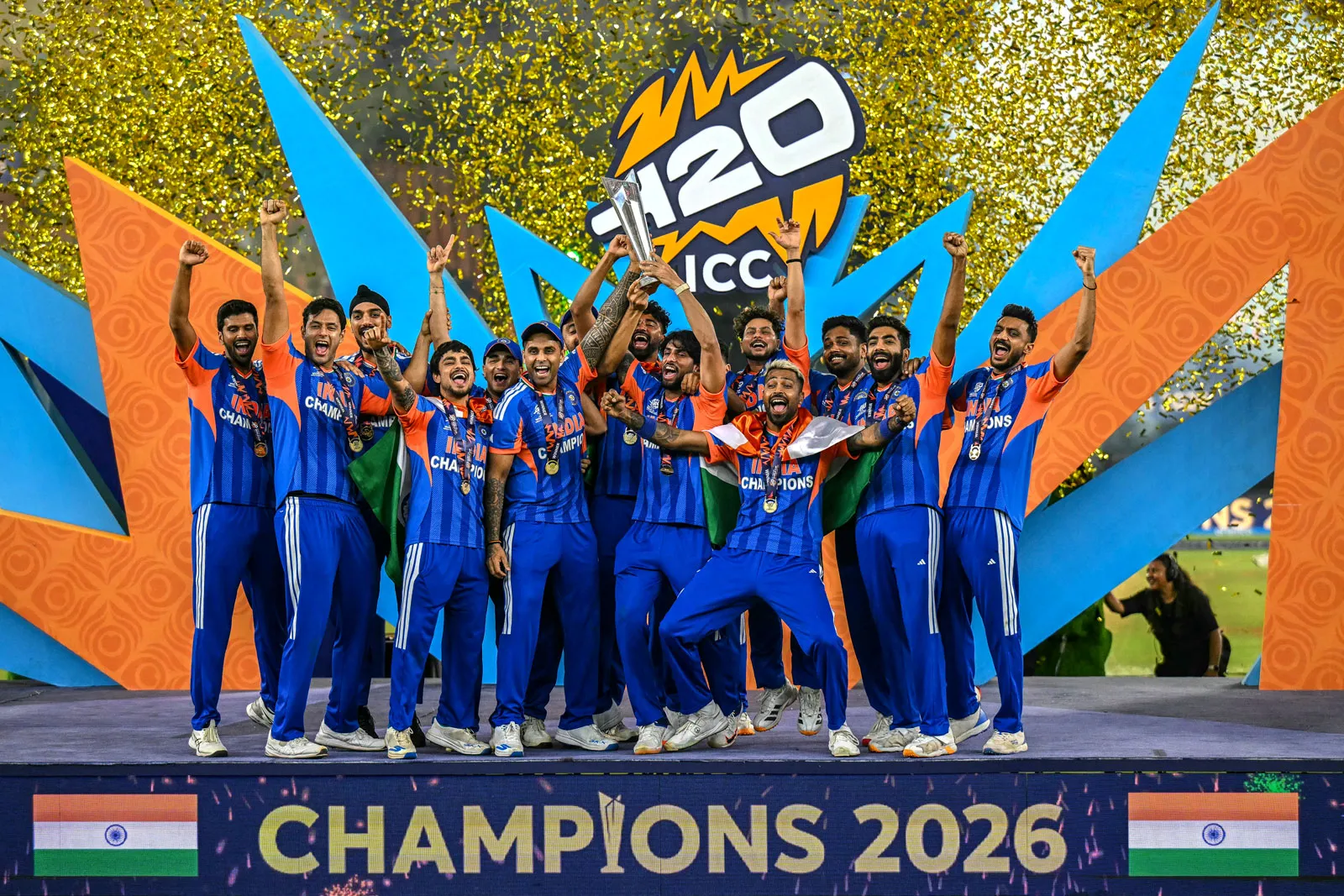
India entered the tournament as defending champions after winning the 2024 edition and successfully retained the title with a commanding victory over New Zealand in the final. The achievement established a remarkable chapter in international T20 cricket history. Beyond the championship result, the competition highlighted the increasing popularity of shorter cricket formats, the development of emerging cricket nations, and the importance of tactical innovation. Every stage demonstrated why international T20 tournaments continue to capture the imagination of millions of supporters.
Tournament Overview and Important Details
The 2026 tournament represented the tenth edition of the Men’s T20 World Cup. India and Sri Lanka shared hosting responsibilities, providing a combination of modern cricket stadiums, enthusiastic audiences, and contrasting playing conditions. Matches were organized across major cricket destinations, including Ahmedabad, Mumbai, Chennai, Kolkata, New Delhi, Colombo, and Kandy.
The competition featured 20 teams divided into four groups during the opening stage. Each group contained five nations, creating opportunities for established cricket powers and developing teams to compete on the same international platform. The top two teams from each group advanced to the Super Eight stage, where the competition became increasingly demanding.
The Super Eight phase determined the four semifinalists, who competed for places in the championship match. This structure rewarded consistent performances while maintaining the unpredictable excitement associated with T20 cricket. Teams needed strong batting depth, disciplined bowling combinations, effective fielding, and intelligent captaincy to succeed. The tournament concluded on March 8, 2026, at Narendra Modi Stadium in Ahmedabad, where India achieved a historic championship victory.
India and Sri Lanka as Tournament Hosts
Hosting a major international cricket competition requires extensive planning, reliable infrastructure, and effective coordination between cricket authorities. India and Sri Lanka offered contrasting cricket environments that contributed significantly to the character of the tournament. Indian stadiums provided large spectator capacities and energetic atmospheres, while Sri Lankan venues introduced different pitch conditions and strategic challenges.
Narendra Modi Stadium in Ahmedabad hosted the championship final, attracting enormous attention because of its capacity and reputation as a major international cricket venue. Wankhede Stadium in Mumbai, Eden Gardens in Kolkata, MA Chidambaram Stadium in Chennai, and Arun Jaitley Stadium in Delhi also played important roles.
In Sri Lanka, Colombo and Kandy hosted important fixtures, allowing international teams to experience different playing surfaces and weather conditions. These differences influenced team selections and match strategies. Fast bowlers, spin specialists, aggressive opening batters, and adaptable middle-order players all faced unique challenges depending on the venue. The shared hosting arrangement demonstrated the strong cricketing traditions of both countries.
Tournament Format and Qualification System
The ICC Men’s T20 World Cup 2026 followed a competitive structure designed to provide opportunities for participating nations while ensuring that successful teams progressed through increasingly difficult stages. The opening group phase featured four groups of five teams, with each side playing its group opponents.
Teams earned points based on match results, while net run rate helped separate sides finishing level on points. This made every run important, particularly during closely contested matches where qualification could depend on relatively small margins.
After the group stage, eight teams advanced to the Super Eight round. These teams were divided into two groups, with the leading two sides from each progressing to the semifinals. The knockout stage increased the pressure because one defeat could end a team’s championship campaign.
This format required teams to demonstrate consistency rather than depend entirely on individual performances. Strong teams needed balanced squads capable of adapting to different opponents, playing conditions, and match situations. Successful tournament campaigns depended on preparation, tactical flexibility, and maintaining composure during high-pressure encounters.
India’s Historic Championship Victory
India’s performance became the defining story of the tournament. Under captain Suryakumar Yadav, the defending champions combined explosive batting with effective bowling to secure another international title. Their campaign demonstrated resilience, particularly after suffering a Super Eight defeat against South Africa.
Rather than allowing that setback to disrupt their ambitions, India recovered with important victories against Zimbabwe and West Indies. Their five-wicket win against West Indies secured progression to the semifinals, where they faced England in an exciting contest at Wankhede Stadium.
India scored 253/7 against England and successfully defended the total despite England reaching 246/7. The seven-run victory demonstrated India’s ability to handle intense knockout pressure.
In the final, India delivered their most commanding performance of the tournament, defeating New Zealand by 96 runs. The victory made India the first nation to successfully defend the Men’s T20 World Cup title and the first to win the competition three times. It was also the first time a team had won the men’s tournament on home soil.
India vs New Zealand: The Grand Final
March 8, 2026 · Narendra Modi Stadium, Ahmedabad
India
255/5
20 overs
FINAL
New Zealand
159
19 overs
India won by 96 runs
The championship final was one of the most memorable matches of the competition. After New Zealand elected to field, India’s batting lineup produced an extraordinary display of attacking cricket. Abhishek Sharma provided a rapid start with 52 runs from 21 deliveries, while Sanju Samson contributed a magnificent 89 from 46 balls. Ishan Kishan strengthened the innings with an aggressive 54 from 25 deliveries.
India finished with 255 runs for five wickets, establishing the highest team total in a Men’s T20 World Cup final. New Zealand faced an extremely difficult chase against India’s disciplined bowling attack.
Jasprit Bumrah delivered an exceptional performance, taking four wickets for just 15 runs. Axar Patel supported him with three important dismissals. New Zealand were eventually dismissed for 159, giving India a convincing 96-run victory. Bumrah received the Player of the Match award, while Sanju Samson was recognized as Player of the Tournament.
Outstanding Players and Individual Performances
The tournament highlighted the importance of individual brilliance within successful team performances. Sanju Samson emerged as one of India’s most influential batters, delivering important innings during the decisive stages of the competition. His aggressive approach, shot selection, and ability to perform under pressure contributed significantly to India’s championship success.
Jasprit Bumrah once again demonstrated his reputation as an outstanding international fast bowler. His control, accuracy, and variations made him particularly effective during crucial overs. His performance in the final illustrated how disciplined bowling can remain decisive even in a format dominated by attacking batting.
Abhishek Sharma and Ishan Kishan also made valuable contributions, demonstrating India’s batting depth and attacking capabilities. For New Zealand, Tim Seifert showed determination during the final with an entertaining half-century despite the challenging target.
The performances of these players reflected the increasingly demanding nature of modern T20 cricket. Successful international players must combine technical ability with adaptability, physical fitness, mental strength, and a clear understanding of changing match situations.
Memorable Semifinal Matches
The semifinal stage provided two contrasting contests that determined the finalists. New Zealand faced South Africa in the first semifinal at Eden Gardens in Kolkata on March 4, 2026. South Africa posted 169/8, but New Zealand responded with an outstanding batting performance, reaching 173/1 in just 12.5 overs. Their nine-wicket victory demonstrated exceptional attacking confidence and secured a place in the championship match.
The second semifinal featured India against England at Wankhede Stadium in Mumbai on March 5. India accumulated an imposing total of 253/7, but England refused to surrender and produced an impressive response. England finished on 246/7, falling just seven runs short of victory.
The narrow result demonstrated the unpredictable nature of knockout cricket, where momentum can shift rapidly. India’s ability to defend a challenging total under pressure proved crucial. Both semifinals highlighted different pathways to success, with New Zealand dominating through aggressive chasing and India progressing through powerful batting and determined bowling.
Importance of Batting and Bowling Strategies
Modern T20 cricket requires teams to develop strategies that balance aggression with calculated decision-making. Throughout the competition, batting teams focused on maximizing scoring opportunities during the powerplay while maintaining enough wickets to accelerate during the final overs.
Opening batters played an especially important role because early momentum often influenced the direction of an innings. Successful teams combined powerful boundary hitting with intelligent strike rotation, ensuring that scoring pressure remained on opposing bowlers.
Bowling strategies were equally important. Fast bowlers relied on variations in pace, yorkers, and accurate deliveries, while spinners attempted to control scoring through changes in flight, speed, and length.
Captains also needed to consider field placements, bowling matchups, and pitch conditions. The effectiveness of these decisions became particularly visible during knockout matches, when small tactical advantages could determine the result. The tournament demonstrated that successful T20 cricket depends on more than aggressive batting. Balanced performances, intelligent planning, and consistent execution remain essential elements of championship-winning teams.
Growing Importance of Emerging Cricket Nations
One of the most valuable aspects of the ICC Men’s T20 World Cup 2026 was the opportunity it provided for emerging cricket nations to compete internationally. Participation in major tournaments helps developing teams gain experience against established opponents while introducing their players to larger audiences.
Countries such as Nepal, Oman, Canada, the United States, Namibia, and Italy represented the expanding geographical reach of international cricket. Their participation demonstrated that interest in the sport continues to grow beyond traditional cricket-playing regions.
Competing against experienced international teams creates important learning opportunities. Emerging players gain exposure to advanced tactical systems, demanding match situations, and higher standards of professional competition.
These experiences can support improvements in domestic cricket structures, youth development programs, and national team preparation. International tournaments also inspire younger generations to participate in cricket and encourage sporting organizations to invest in better facilities. The continued inclusion of developing cricket nations is essential for making international competitions more diverse, competitive, and globally relevant.
Fan Engagement and Global Cricket Popularity
The tournament generated substantial enthusiasm among cricket supporters, particularly across South Asia, where the sport enjoys enormous cultural importance. Stadium audiences, television coverage, digital platforms, and social media discussions helped maintain interest throughout the competition.
The ICC Men’s T20 World Cup 2026 also demonstrated how shorter cricket formats can attract audiences with different levels of familiarity with the sport. T20 matches generally offer rapid scoring, frequent changes in momentum, and dramatic finishes within a relatively compact period.
These characteristics make the format accessible to younger viewers and international audiences discovering cricket for the first time. Supporters followed team performances, individual statistics, match highlights, and championship developments throughout the event.
Major rivalries and knockout matches created especially strong interest, while the final between India and New Zealand became a significant sporting occasion. The competition reinforced the relationship between international cricket and digital engagement, showing how modern communication platforms contribute to the sport’s visibility and continued expansion.
Long-Term Impact on International T20 Cricket
The tournament’s influence extends beyond the final result. India’s championship victory established a new benchmark for sustained success in international T20 cricket, demonstrating the value of squad depth, effective leadership, and consistent preparation.
Other participating nations gained valuable insights into the tactical and technical demands of modern competition. Teams can use tournament performances to evaluate batting combinations, bowling resources, fielding standards, and player development priorities.
The ICC Men’s T20 World Cup 2026 also emphasized the growing importance of specialist T20 skills. Players increasingly need to adapt quickly to different surfaces, manage pressure during decisive moments, and execute precise strategies against opponents with varied playing styles.
For cricket administrators, the event highlighted the benefits of international collaboration, investment in infrastructure, and broader participation. For supporters, it created lasting memories while strengthening anticipation for future global competitions. The tournament’s legacy will be reflected in evolving team strategies, emerging talent, and the continued development of T20 cricket worldwide.
Conclusion
The ICC Men’s T20 World Cup 2026 will be remembered as a historic international cricket tournament that combined outstanding performances, competitive matches, and memorable championship moments. Hosted by India and Sri Lanka, the competition brought together 20 nations and showcased the excitement of modern T20 cricket.
India’s remarkable victory over New Zealand in the final established several important records, including becoming the first team to successfully defend the Men’s T20 World Cup title and the first nation to win three editions of the competition.
Beyond India’s achievement, the tournament demonstrated the increasing competitiveness of international cricket, the importance of emerging nations, and the continuing evolution of batting and bowling strategies. With passionate supporters, outstanding individual performances, and exciting knockout encounters, the 2026 edition strengthened the global appeal of T20 cricket and created a memorable chapter in the sport’s history.