

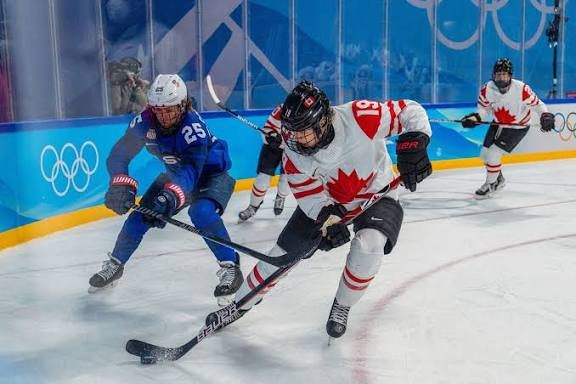
Ice hockey is one of the most exciting and competitive sports at the Winter Olympic Games. Combining speed, strength, teamwork, and tactical intelligence, it attracts millions of fans who enjoy watching elite players compete for national pride. Every tournament brings intense rivalries, dramatic goals, outstanding saves, and memorable performances that can define a player’s career. Unlike regular professional league competitions, the Olympics place countries at the centre of the action, making every match meaningful for players and supporters.
The ice hockey Olympics tournament features national teams competing under international rules, with the goal of winning one of the most respected prizes in winter sport: an Olympic gold medal. Men’s ice hockey has been part of the Winter Olympics since the inaugural edition in 1924, while women’s ice hockey became an Olympic sport in 1998. Over the decades, the competition has developed into a global showcase for established hockey nations and emerging teams. Understanding its history, format, rules, leading countries, and famous moments helps fans appreciate why Olympic hockey remains such a special sporting event.
History of Ice Hockey at the Olympic Games
Ice hockey has a long Olympic history that reflects the growth of the sport around the world. Before the first Winter Olympic Games were introduced, men’s ice hockey appeared at the 1920 Summer Olympics in Antwerp, Belgium. It subsequently became a central event at the first Winter Olympics in Chamonix, France, in 1924. Canada established itself as an early powerhouse, winning several of the first Olympic tournaments and helping popularise the sport internationally.
As international competition expanded, countries such as the Soviet Union, Sweden, Czechoslovakia, Finland, and the United States became major contenders. The rivalry between Canada and the Soviet Union produced some of the most memorable periods in hockey history. Olympic tournaments also became a stage for players whose careers were shaped by representing their countries rather than professional clubs.
Women’s ice hockey reached another milestone when it was introduced at the 1998 Winter Olympics in Nagano, Japan. Canada and the United States quickly developed a major rivalry in the women’s competition, while European nations strengthened their programmes. Today, Olympic hockey represents decades of sporting tradition, international development, and unforgettable competition between the world’s strongest national teams.
Ice Hockey Olympics 2026: Tournament Overview
The Milano Cortina 2026 Winter Olympics brought the world’s leading hockey nations together in Italy for another memorable international competition. The men’s tournament featured 12 national teams, while the women’s tournament included 10 teams. Matches were held in Milan, giving the competition a modern setting and attracting fans from different parts of the world. One of the biggest attractions was the return of National Hockey League (NHL) players to the men’s Olympic tournament for the first time since the 2014 Sochi Winter Olympics.
The 2026 competition delivered outstanding performances and intense medal battles. In the men’s gold medal game on 22 February, the United States defeated Canada 2–1 in overtime, with Jack Hughes scoring the winning goal. The victory gave the Americans their first Olympic men’s hockey gold since 1980. Canada, meanwhile, continued to demonstrate why it remains one of the most successful nations in international hockey. These results highlighted the unpredictable nature of Olympic competition, where even teams filled with superstars must perform under enormous pressure.
Tournament Format and Competition Structure
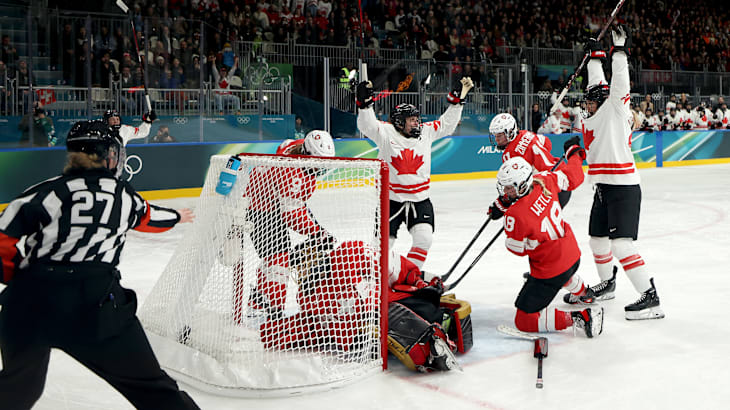
Olympic hockey tournaments generally combine group-stage matches with elimination rounds. Teams first compete to establish their rankings, and the results determine their routes to the quarter-finals and medal games. This structure rewards consistency while allowing teams that struggle early to fight their way back into contention.
In the 2026 men’s competition, the 12 teams were divided into three groups of four. Every team played three preliminary matches, after which the teams were ranked across the tournament. The top four entered the quarter-finals directly, while the remaining eight competed in qualification playoff games. Winners progressed to the quarter-finals, followed by semi-finals and the bronze and gold medal matches.
The women’s competition followed a different group arrangement, with 10 teams divided into two groups of five. The leading teams advanced to the quarter-finals according to the tournament’s qualification rules. From that point, knockout hockey created a direct path towards the medals.
| Tournament feature | Men’s competition | Women’s competition |
|---|---|---|
| Participating teams in 2026 | 12 | 10 |
| Preliminary format | Three groups of four | Two groups of five |
| Main objective | Advance to the knockout stage | Advance to the knockout stage |
| Final stages | Quarter-finals, semi-finals and medals | Quarter-finals, semi-finals and medals |
| Main prize | Olympic gold medal | Olympic gold medal |
Basic Rules of Olympic Ice Hockey
Ice hockey is played on a rectangular sheet of ice by two teams attempting to score by shooting a puck into the opponent’s goal. Players use sticks to control and pass the puck, while goalkeepers protect their nets using specialised equipment. The game demands excellent balance, quick decision-making, accurate passing, and the ability to change direction at high speed.
A standard international game consists of three periods, each lasting 20 minutes of playing time. The clock stops for various interruptions, so the total time required to complete a match is considerably longer. Players can be penalised for actions such as tripping, hooking, slashing, or holding an opponent. Depending on the infraction, the opposing team may receive a power play, giving it a temporary numerical advantage.
Important rules and concepts include:
-
Offside: Players must enter the attacking zone according to the rules governing the puck and attacking players.
-
Icing: Certain long-distance puck clearances are prohibited when the conditions for icing are met.
-
Penalties: Illegal actions can leave a team short-handed.
-
Overtime: Tied games may require additional sudden-death play.
-
Shootouts: These can decide tied preliminary-round matches when the applicable tournament rules require them.
Understanding these rules makes it easier for new viewers to follow tactical decisions, referee calls, and the dramatic changes that occur during close games.
The Most Successful Olympic Hockey Nations
Several countries have built remarkable reputations through decades of Olympic competition. Canada is historically one of the strongest men’s hockey nations, thanks to its deep player pool, professional development systems, and established hockey culture. The United States has also produced outstanding teams, including the legendary 1980 squad that defeated the Soviet Union before winning gold.
European countries have played an equally important role in the sport’s history. Sweden and Finland are known for structured team play, disciplined defensive systems, and technically skilled players. Czechia has a proud hockey tradition, while Slovakia has established itself as a dangerous competitor capable of challenging leading nations.
The women’s competition has been dominated historically by Canada and the United States, although other countries have continued to improve. Sweden, Finland, Switzerland, and Czechia have all contributed to a more competitive international landscape.
Countries that consistently perform well often share several characteristics:
-
Strong youth development and coaching programmes.
-
Experienced goalkeepers who perform under pressure.
-
Effective defensive organisation and transition play.
-
Skilled forwards who can create scoring opportunities.
-
Excellent teamwork and preparation for international tournaments.
These strengths help explain why certain nations repeatedly reach the medal rounds, although no team can guarantee success at the Olympics.
Famous Players and Memorable Olympic Performances
Olympic hockey has produced legendary players whose performances remain part of sporting history. Wayne Gretzky helped define Canadian hockey, while Mario Lemieux and other great players contributed to the country’s international reputation. In 2010, Sidney Crosby scored the overtime winner against the United States in the men’s gold medal game at the Vancouver Olympics, creating one of the most famous moments in Canadian sporting history.
The United States’ 1980 victory over the Soviet Union remains another defining chapter. The American team, made up largely of collegiate players, overcame a highly favoured opponent before going on to win the gold medal. The achievement became known as the Miracle on Ice and demonstrated how preparation, belief, and teamwork can overcome expectations.
Women’s Olympic hockey has also produced remarkable athletes. Canadian stars such as Hayley Wickenheiser became international icons, while American players including Hilary Knight helped maintain one of the sport’s strongest rivalries.
In 2026, Jack Hughes added his name to Olympic history by scoring the overtime goal that secured the United States’ men’s gold medal against Canada. Such performances demonstrate why Olympic hockey remains memorable long after the final whistle.

Why Olympic Ice Hockey Is Different from League Hockey
Professional leagues and international tournaments share the same basic sport, but the Olympic environment creates a different kind of pressure. League teams compete over long seasons, allowing them time to recover from defeats and adjust their tactics. Olympic teams, by contrast, have a short period in which every result can influence their medal chances.
Players must quickly develop chemistry with teammates who may normally represent different professional clubs. Coaches have limited time to establish defensive systems, power-play combinations, and line arrangements. National identity also adds an emotional dimension, as athletes represent their countries rather than a city or club.
The ice hockey Olympics competition can therefore reward more than individual talent. A team with excellent organisation, strong communication, and reliable goaltending can challenge a roster filled with famous players. The single-elimination rounds are particularly demanding because one mistake or one outstanding save can change the outcome.
The Olympics also provide a rare opportunity for fans to see athletes from different leagues and hockey systems compete under the same international rules. This creates fascinating tactical comparisons and allows supporters to judge the world’s best players in a unique setting.
How to Follow Olympic Hockey Matches
Fans can follow Olympic hockey through television coverage, official tournament updates, match reports, team announcements, and live score services. Coverage varies by country, so viewers should check the official Olympic broadcaster in their region for availability and schedules.
To get more from each match, pay attention to more than the final score. Shots on goal can indicate attacking pressure, while face-off success can influence possession. Penalty minutes help explain power-play opportunities, and goalkeeper statistics offer insight into defensive performance.
Here are useful ways to follow a tournament:
-
Check the fixtures and group standings before each round.
-
Review confirmed team line-ups and goalkeeper selections.
-
Follow goals, assists, penalties, and period-by-period scores.
-
Compare team statistics rather than relying only on possession or shot totals.
-
Watch how coaches adjust their tactics during close games.
These details help fans understand how matches develop and why one team may win despite having fewer shots or less time with the puck.
The Future of Olympic Ice Hockey
The future of Olympic hockey looks promising as more countries invest in coaching, facilities, junior programmes, and women’s competitions. Established hockey nations continue to produce elite athletes, while developing programmes create opportunities for new teams to compete internationally.
The return of NHL players to the 2026 men’s tournament showed the appeal of bringing the sport’s biggest stars together on the Olympic stage. Their participation increased interest in national-team rivalries and allowed supporters to see world-class professionals compete for Olympic medals.
Technology and broadcasting are also changing how fans experience the game. High-definition coverage, advanced statistics, replay systems, and digital reporting make it easier to analyse performances. At the same time, the essential appeal remains unchanged: speed, physical commitment, teamwork, and the excitement of a goal scored at a crucial moment.
Future tournaments will continue to test established champions while offering emerging teams opportunities to create their own history. Greater participation, strong development programmes, and international cooperation can help make the sport more competitive and accessible.
Conclusion
Ice hockey combines athletic skill, tactical intelligence, and national pride in a way few sports can match. Its Olympic history includes legendary victories, intense rivalries, remarkable individual performances, and dramatic medal games. From the early men’s tournaments to the growth of women’s hockey, the sport has become an essential part of the Winter Olympic programme.
The ice hockey Olympics competition also demonstrates that success depends on much more than star players. Strong goalkeeping, disciplined defending, smart coaching, and teamwork can determine the difference between defeat and a gold medal. The 2026 tournament reinforced this lesson through the United States’ overtime victory over Canada in the men’s final.
For new and experienced fans alike, following Olympic hockey offers a chance to appreciate the sport’s history, rules, leading nations, and unforgettable moments. As international competition continues to evolve, Olympic hockey will remain one of the Winter Games’ most exciting events.